[ INTEL DESKTOP CPU // MODEL RECORD ]
Intel Pentium 166
P54C Pentium, Q1 1996; 1 core / 1 thread; 166 MHz; 66 MHz host bus; Socket 7 (296-pin SPGA); 16 KB split L1 (8 KB instruction + 8 KB data); external motherboard/chipset L2; 14.5 W maximum thermal design power (standard 3.3 V P54C). Verify the complete package marking and motherboard support before installation.
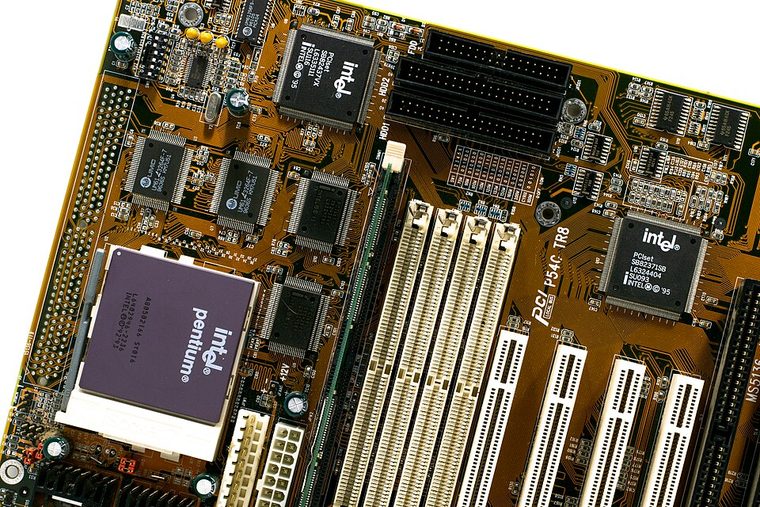
MODEL IDENTIFICATION: Intel Pentium 166. This record refers to this desktop SKU, not an entire processor generation; verify the physical marking, S-spec/ordering code and motherboard support list.
Verified model specifications
| Catalog path | Intel → Pentium generations |
|---|---|
| Model / launch era | Intel Pentium 166; P54C Pentium, Q1 1996 |
| Cores / threads / frequency | 1 core / 1 thread; 166 MHz; 66 MHz host bus |
| Package / socket | Socket 7 (296-pin SPGA) |
| Cache | 16 KB split L1 (8 KB instruction + 8 KB data); external motherboard/chipset L2 |
| TDP | 14.5 W maximum thermal design power (standard 3.3 V P54C) |
| Memory / bus | FPM/EDO or early SDRAM as implemented by the Socket 7 chipset; 66 MHz host bus. The CPU has no integrated memory controller. |
| Platform compatibility | Use a Socket 7 motherboard whose voltage regulator, 66 MHz bus setting, BIOS and chipset support the standard-voltage P54C Pentium 166. Do not assume compatibility with later split-voltage P55C/MMX boards or CPUs based on socket fit alone. |
Compatibility and service notes
- Use a Socket 7 motherboard whose voltage regulator, 66 MHz bus setting, BIOS and chipset support the standard-voltage P54C Pentium 166. Do not assume compatibility with later split-voltage P55C/MMX boards or CPUs based on socket fit alone.
- FPM/EDO or early SDRAM as implemented by the Socket 7 chipset; 66 MHz host bus. The CPU has no integrated memory controller.
- Standard 3.3 V P54C Pentium 166; not the 166 MHz Pentium MMX (P55C) or mobile variants.
- Before fitting, confirm the exact motherboard manufacturer CPU list, revision, minimum BIOS, power delivery, cooling, package and memory type. Socket fit alone does not establish electrical or firmware compatibility; never force a processor.
Service & archival record
Record the complete processor marking and S-spec/ordering code, stepping, board model/revision, chipset, BIOS/microcode, memory configuration, cooler, power profile, physical condition and provenance. Separate measured behavior from published specifications.
Handle the package by its edges and protect contacts. Inspect for contamination, damaged pins/pads, socket damage and uneven cooler pressure before use.
Sources & further reading
- Intel ARK — exact-model lookup: Intel Pentium 166Intel’s official product-specification search. Legacy products may have limited or archived ARK data; cross-check the physical S-spec and Intel-era documentation.
- Intel Support — desktop processor installation and handlingManufacturer guidance for processor installation; motherboard firmware and platform support must also be confirmed with the board vendor.
- Bitsavers — archived Intel component documentationHistorical Intel processor datasheets and technical manuals for archived Pentium generations; use the appropriate generation document and verify revision-specific errata.
- PhilsComputerLab — Pentium MMX 166 is one of the Best Retro ProcessorsIndependent video review; treat as supplementary context, not primary manufacturer documentation.
Published specifications are not a guarantee of system compatibility. Confirm the exact processor marking and board-vendor documentation.