FILE OPERATION/PAPERCLIP // 1945–1950s
Operation PAPERCLIP
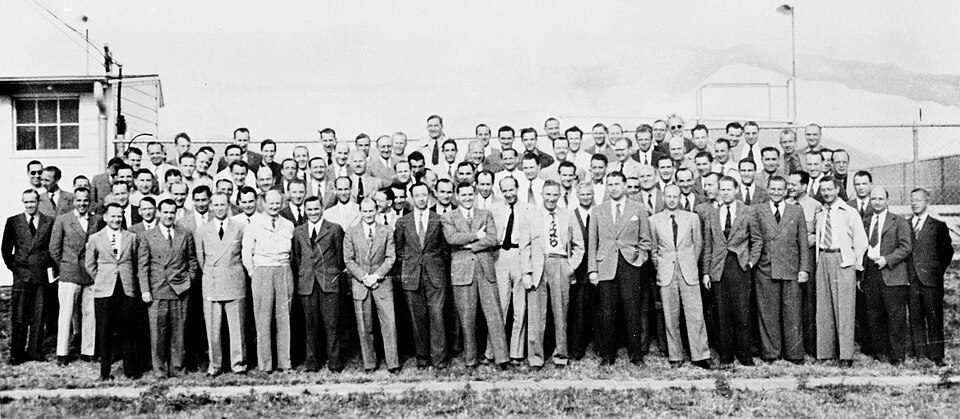
The United States recruited German scientists and technicians after the war, sometimes softening or hiding Nazi histories to permit entry. The record documents compromised vetting but does not make every recruit equally culpable.

CASE ANALYSIS
What the record supports
CLAIM AND BOUNDARY
PAPERCLIP brought German scientists and technicians to the United States, including some whose records implicated them in Nazi organizations or forced labor. Officials deliberately compromised vetting in certain cases. It is inaccurate to claim every recruit was a war criminal or knowingly selected for direct participation in atrocities.
CHRONOLOGY AND CONTEXT
Initially, U.S. agencies screened technical personnel under policies restricting former Nazi Party members. As the Cold War intensified, agencies sought rocket, aviation, medical, and weapons expertise. Some files were sanitized or reclassified to permit recruitment. The program’s eligibility and name evolved, following earlier postwar efforts.
DOCUMENTARY EVIDENCE
National Archives personnel files, Army records, Justice Department reviews, and congressional documents show recruitment, waivers, and altered biographies. Historians have identified individuals linked to Nazi institutions and forced labor. Evidence supports an institutional pattern of compromised scrutiny, but individual responsibility must be judged from each person’s record.
CONTRARY EVIDENCE AND ALTERNATIVES
Some recruits had technical roles but limited or disputed personal involvement in crimes; membership alone does not establish participation in a specific atrocity. Agencies rejected candidates too. Later narratives sometimes generalize from notorious cases, so each biography should be tested against employment, testimony, and contemporaneous records.
UNCERTAINTY
Files were incomplete and officials had incentives to minimize embarrassing histories. Deliberate concealment differs among people and agencies. A sanitized file is evidence of manipulation, not automatic proof of every later allegation. Forced-labor knowledge and individual conduct require documentation beyond employer or party-card status.
CALIBRATED ASSESSMENT
PAPERCLIP placed Cold War advantage above consistent accountability. The record supports recruitment of some people with Nazi pasts and concealment in specific cases. It does not make all scientists equally culpable or establish crimes solely from affiliation. The ethical failure is clear even as individual responsibility varies.
WHAT WOULD CHANGE THIS
New personnel, camp, and labor records could change individual findings. Assessments should compare service files, victim testimony, and scholarship. Evidence of systematic falsification could broaden findings, but missing documents alone cannot prove a particular recruit’s guilt.
DOCUMENT TRAIL
Sources & limitations
- National Archives, Paperclip-related recordsOfficial finding aid identifies agency and personnel records; series are extensive and uneven.
- GAO, Nazi War Criminals: U.S. Government ResponseRetrospective review documents failures and records located; it is not a complete personnel registry.
- National Security Archive, PaperclipCurated declassified documents clarify recruitment and concealment; selection is not exhaustive.