FILE A42-HS-036 // HISTORY & SOCIETIES
The Great Fire of London and the Catholic-Arson Plot
ASSESSMENT: The fire was accidental; claims of a Catholic conspiracy were disproven.
The 1666 Great Fire destroyed much of London. Rumors blamed Catholics, foreigners, or political enemies, and the Pudding Lane baker Robert Hubert falsely confessed to arson. Investigations found no coordinated plot. The genuine historical story is how catastrophe and sectarian prejudice turned suspicion into state and popular accusation.
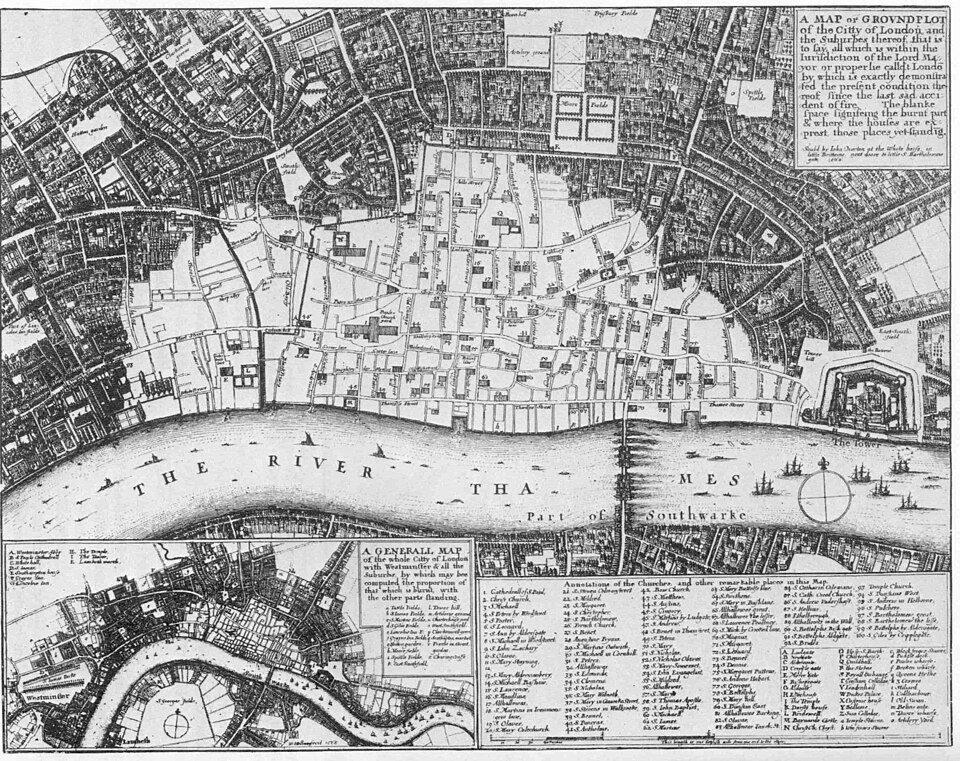

Claim and historical context
The fire began at Thomas Farriner’s bakery on 2 September and spread through wooden buildings during dry, windy conditions. Authorities struggled to contain it. The city’s damage and displaced population produced an immediate search for intentional enemies.
Chronology and primary record
Samuel Pepys’s diary and civic records document the fire’s progression and response. Hubert confessed months later but was not in England when it began; he was executed despite the contradiction. The official inquiry concluded the fire was accidental, not a Catholic conspiracy.
What the record establishes
The monument’s inscription once included language blaming “Popish frenzy,” later removed in 1830. This is evidence that a false accusation entered public commemoration. Historians examine how anti-Catholic politics shaped the inquiry and the interpretation of Hubert’s confession.
Competing interpretations and counterevidence
Fires can be deliberately set, and wartime fears of French or Dutch sabotage were not abstract. But investigators found no corroborated plot in this case. Hubert’s confession was inconsistent and unsupported; his execution illustrates how certainty exceeded evidence.
Calibrated verdict
The best-supported verdict is accidental fire followed by baseless sectarian scapegoating. There is no evidence that Catholics organized the blaze or that a government agency concealed a proven arson plan.
Evidence that could change this assessment
A contemporaneous, independently corroborated operational order or forensic evidence tying multiple actors to ignition would change the conclusion. A confession contradicted by travel records, without corroboration, is not sufficient evidence of conspiracy.
Source notes and limitations
These selected records and named research sources address The Great Fire of London and the Catholic-Arson Plot; each citation supports only the specific historical point identified in its note.
- Museum of London, “The Great Fire of London”Museum account of the fire, investigations, and aftermath.
- British Library, Samuel Pepys’s Great Fire diary accountContemporary eyewitness account and related manuscript record.
- Samuel Pepys, “Diary: 1666”Contemporary eyewitness entry for the fire’s beginning.